18 November
Marketing
How do we define SEO when search is no longer limited to search engines?
- Supriya Sachdeva
- 0 Comments
For the longest time, Google was almost synonymous with search. We didn’t just search for something online; we Googled it. The brand name became part of everyday vocabulary, much like how “Bangalored” entered business conversations in the early 2000s to describe jobs outsourced to India.
For SEO professionals, this meant working within a discovery journey that was largely centred around search engines. A user searched on Google, browsed the search results, clicked through to a website and evaluated the offering before making a decision.
The focus of SEO was largely on improving a website’s visibility in search results, attracting relevant organic traffic and converting those visits into business outcomes. Rankings, clicks and website traffic were central measures of success.
But that journey looks quite different today.
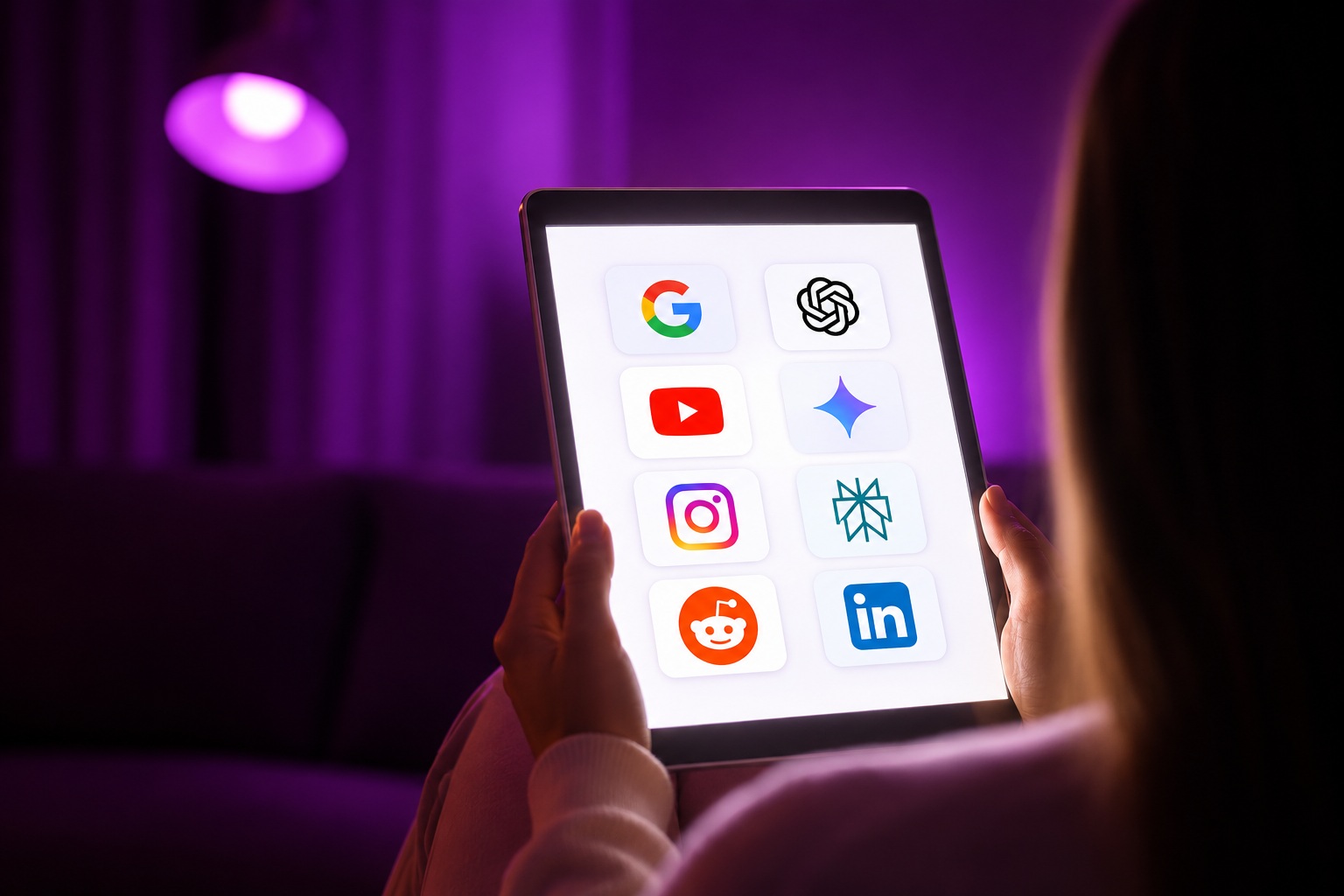
Search is a behaviour, not a platform, and it's no longer limited to search engines
Think about how you might research something before buying it today.
If you’re planning to buy a new phone, you might start with a Google search, watch a few YouTube reviews, check what people are saying on Reddit and perhaps ask ChatGPT to compare your shortlisted options.
If you’re looking for a restaurant in Mumbai, you might explore Instagram, check Google reviews, browse food blogs or ask an AI tool for recommendations.
And if you’re a business leader researching a technology solution, you might use Perplexity or Gemini to understand the market, compare vendors and shortlist potential partners.
The point is, search is happening everywhere. Different platforms play different roles in helping people discover, research and evaluate brands.
AI-powered discovery has added another layer to this behaviour. Instead of opening multiple websites and piecing together information, people can now ask conversational questions and get summaries, comparisons and recommendations in one place.
Discovery and consideration can happen before a website visit
There’s another shift I’ve noticed in my own work as an SEO consultant, particularly while working with a technology company offering data engineering services.
The kind of enquiries we started receiving was quite different from what we’d traditionally seen when lead generation depended largely on Google search results and website visits.
With AI Overviews and platforms like ChatGPT becoming part of the research journey, prospective clients were increasingly arriving with a better understanding of potential service providers. They were already seeing shortlisted recommendations, along with reasons why certain companies might be relevant to their requirements.
What I found particularly interesting was that some of the credibility-building and initial consideration we’d traditionally worked hard to establish through website landing pages and carefully designed user journeys was now happening much earlier in the discovery process.
Think about it. A prospective client looking for a data engineering partner could already have a shortlist of companies, understand what each one offers and have a reason to consider one over another, all before visiting their websites.
That’s a big shift.
This doesn’t make the website any less important. It simply changes the role it plays. Instead of always being the starting point of discovery, the website increasingly becomes a place where people validate what they’ve already learnt, explore the offering in greater detail and decide whether to take the next step.
Search has moved beyond a single platform. It’s now a behaviour that spans an interconnected digital ecosystem.
From SEO to brand discoverability optimisation
When people discover and evaluate brands across multiple platforms, businesses can’t look at SEO as just a website optimisation exercise.
They need to think about how their brand shows up across the wider digital ecosystem.
This calls for a more integrated approach that brings together traditional SEO, Answer Engine Optimisation (AEO), Generative Engine Optimisation (GEO), content strategy and brand authority building.
So, what do AEO and GEO bring to the table?
They focus on how information about a brand is surfaced, interpreted and referenced in AI-powered experiences. For instance, when someone asks ChatGPT to recommend a software company for a specific business requirement, what helps a brand become part of that recommendation?
It’s not just about having keywords on a website. AI systems need to understand what the brand does, who it serves, what it’s known for and why it’s relevant to a particular query.
That understanding is shaped by several things: the content on the website, how clearly the brand communicates its expertise, the topics it consistently talks about and the information available about it across other credible sources.
This is where traditional SEO, AEO and GEO come together.
The focus needs to move from simply making websites visible in search results to making brands discoverable across the digital ecosystem. Brands need to be visible, but they also need to be associated with the right topics, expertise and situations in which their products or services are relevant.
I see this as the broader evolution of SEO: Brand Discoverability Optimisation.
The four dimensions of brand discoverability
In my approach to search optimisation, I look at brand discoverability through four interconnected dimensions:
- Discoverable
Can people and search systems find your brand across the platforms where your audience is looking for information?
- Understandable
When they find you, can they clearly understand what your brand offers, what it stands for and who it serves?
- Credible
Is there enough evidence of your expertise and reputation to build trust? Does your brand have a credible presence beyond its own website?
- Recommendable
When someone is looking for a solution that your business offers, is your brand relevant and credible enough to be considered or recommended?
These four dimensions work together. Being visible is a starting point, but being understood, trusted and considered for the right reasons is what makes brand discoverability meaningful.
What does this mean for businesses?
The way people search has changed, and businesses need to rethink how they approach SEO.
This doesn’t mean throwing away everything we’ve learnt about traditional SEO. Website rankings, organic traffic and technical optimisation still matter. But they’re now part of a much bigger picture.
Here’s what businesses should be looking at:
- Strengthening SEO foundations
A well-optimised website remains essential. Technical SEO, a clear website structure, relevant content and strong internal linking help search engines and AI systems find and understand the information on your website.
- Building contextual relevance
It’s not enough to tell people what your business does. Your content needs to explain what you’re good at, who you work with, what problems you solve and the situations where your products or services make sense.
The more clearly you communicate these connections, the easier it becomes for people and AI systems to understand where your brand fits.
- Establishing brand authority
Your website isn’t the only place where your brand’s credibility is built. Thought leadership, industry publications, digital PR, expert contributions, relevant mentions and third-party validation all help shape how your brand is perceived.
- Expanding discovery
Think beyond Google. Where does your audience go to research and evaluate businesses? It could be YouTube, LinkedIn, Reddit, Instagram or AI-powered platforms like ChatGPT and Perplexity.
Your brand needs a presence in the places that matter to your audience, with content suited to how people use each platform.
- Rethinking measurement
Rankings and organic traffic will continue to be important SEO metrics, but they don’t tell the whole story anymore.
Businesses should also start looking at how often their brands appear in AI-generated answers, whether they’re being cited as a source, how frequently they’re recommended for relevant queries, and whether this visibility is contributing to meaningful website visits and business enquiries.
Ultimately, businesses don’t need to abandon traditional SEO or treat AEO and GEO as separate activities. They need an integrated strategy that brings these disciplines together to build sustained brand discoverability.
Rethinking your search strategy?
If you’re rethinking your SEO strategy, exploring AEO and GEO or wondering how your brand shows up across AI-powered discovery platforms, let’s talk.
I work with B2B and B2C businesses to build integrated, brand-led search strategies that bring together SEO, AI Search Optimisation, content and brand authority.
Let’s discuss how your brand can build visibility, relevance and credibility in the evolving search landscape.
Related Posts
Why B2B brands need a unified digital marketing engine
- Supriya Sachdeva
- January 13, 2026
B2B brands are active across digital but often lack compounding impact. This article explains h ..